In this post, I will explain what Injective crypto is and how it works. I will then explore whether I think the Injective protocol is a good investment by scoring it across four dimensions: Team, Product, Tokenomics, and Momentum.
What is Injective Crypto?
Injective is a blockchain that was purposefully built for financial applications.
Think of it as the iOS or Android equivalent for blockchains but for financial applications only.
The injective platform offers developers plug-and-play modules that make it extremely easy for them to build financial dApps.
For example, you can plug into their on-chain order book and build a decentralized exchange, you can buckle into their Oracle solution for price feeds, you can set up a dApp for options trading, prediction markets, derivatives exchanges, and more.
They call these modules financial infrastructure primitives.
Two things set apart the Injective ecosystem from others
- It’s built an exchange module that allows you to build an order book exchange that cannot be exploited through front running or MEV
- It works across multiple chains. The injective bridge Uses decentralized cross-chain bridging infrastructure such as Cosmos’s IBC (inter-blockchain communication) to speak to the Ethereum blockchain, Cosmos, Solana, Polkadot, and many others.
About the Injective Chain
Injective is a layer 1 blockchain built on the Cosmos SDK.
As a result, Injective uses the tendermint-based proof-of-stake mechanism.
That is a mouthful but what you need to know is that it has the respect of crypto developers and is considered a robust consensus mechanism with fast speeds and a lower carbon footprint.
Cosmos is a blockchain that makes it easy for anyone to build their blockchain by using their out-of-the-box solution.
If you want to understand Injective’s tech stack well then I suggest you read my article explaining the Cosmos Ecosystem.
Injective supports both EVM (ethereum virtual machine) and Rust coding languages which makes it easy for developers to port the dApps they have built on other chains onto Injective.
Injective also also used Cosm Wasm which is a platform for smart contracts.
This is popular with developers as it uses WebAssembly which is a coding standard that most developers are comfortable with.
The team is strong and backed by a notable group of prominent investors including Binance Labs, Jump Crypto, Pantera Capital, and Mark Cuban.
Injective Team
Co-founders Eric Chen and Albert Chon are featured in Forbes’s 30 under 30 list for Finance in 2024.

Eric Chen is the CEO of Injective Labs.
Eric is a whizz kid with a finance background who dropped out of college to start a decentralized exchange with an order book back in 2018.
He soon realized that Ethereum’s high congestion and gas fees were not going to allow him to build the product he envisioned so he set up about to build the platform that you need to do that.
What kind of things have been built on top of Injective?
The best way to get an intuitive sense of where INjective stands out in the blockchain space is to look at some of the dApps that have been built using Injective.
1. Helix
Helix is an exchange with a decentralized order book and zero gas fees.
Up until recently setting up a Decentralized exchange with an order book has been too expensive to implement.
The workaround led to the creation of DEXs such as Uniswap, Bancor and the like that use an automated market maker.
These exchanges source liquidity from liquidity providers who take a cut in fees and the trade is executed based on a formula that is embedded in the smart contract.
To understand how traditional DEXs work I suggest you read my explanation of Uniswap.
An order book on the other hand matches buyers and sellers.
They each place their orders on either side of the trade and when I match is made the order is executed.
Sending these orders to a blockchain is expensive on high-cost blockchains such as Ethereum.
However, newer L1 and L2 solutions allow you to do that at an insignificant cost.
Helix is one such dApp where you can trade in a decentralized manner (i.e. not custody and no KYC) using Injective’s fully decentralized MEV-resistant on-chain orderbook.
This means you can set up traditional traders such as limit order which is something you cannot do on Uniswap.
2. Mito
Mito Finance is a platform that allows projects to launch their own token and immediately create liquidity for it.
The dApp features trading strategy vaults that automate various trading strategies using the Injective order book.
3. Talis
An NFT marketplace
4. Hydro
A protocol for generating yield from Real-world assets and optimizing yield strategies.
5. Neptune
A borrowing and lending platform similar to Compound.
The INJ token
INJ is a native token which has the following uses
- governance token for community members to vote on
- to pay gas fees
- Staking. Validators need to stake INJ and token holders can delegate their INJ to these validators
- Token burning
- Collateral in derivatives markets
INJ Token Supply and Token Burn
Injective has a total token supply of 100 million which will inflate by 7 million tokens per year. However, they have also created a token burn mechanism which they claim will lead to a deflationary outcome. Here is how their token burn works
Injective charges 0.1% for maker and taker fees. It then places 60% of these fees in an open auction that anyone can bid on using Inj tokens. This stimulates the demand for inj tokens but once the fees are auctioned off the INJ that was used to purchase them is burned. The burn auction effectively reduces the supply of INJ.
Token allocation
| Token Name | INJ |
|---|---|
| Binance Launchpad Sale | 9% |
| Seed Sale | 6% |
| Private Sale | 17% |
| Team | 20% |
| Advisors | 2% |
| Ecosystem Development | 36% |
| Community Growth | 10% |
Is injective a good investment?
To answer this I used the Elemental Crypto framework for assessing crypto projects. The methodology evaluates crypto protocols across 4 dimensions.
- Team: 95%
- Product: 90%
- Tokenomics: 75%
- Momentum: 60%
1. Team
Are the founders legit with related experience? ✔️
Yes, founders are young but they have sufficient years of finance experience. Their head of engineering was the Global Head of Data Engineering at Goldman Sachs. The rest of the team comes across well too
Have they built Web 3 projects before? ✔️
The head of product was at crypto.com before. The designer is from Dune and Coinmarketcap. Engineers have blockchain experience, the HR head used to work at Kraken
Did they do an exit? ❌
No
Can you find legit profiles on LinkedIn? ✔️
Yes
Did they raise funds? ✔️
Yes, $40Mn from the likes of Pantera, Jump, Marc Cuban, Binance Labs, and others. Also raised an investment fund of 150Mn to develop an ecosystem of dApps
How long have they been around? ✔️
Since 2018
Public appearances through Interviews/podcasts ✔️
Yes, the CEO makes frequent podcast appearances and presentations
2. Product
Is it easy to understand what they do? ✔️
Yes if you know a little about crypto
What is it?
A blockchain that developers can easily build financial applications on top of.
Is there a demand for their product? ✔️
TVL at $65Mn
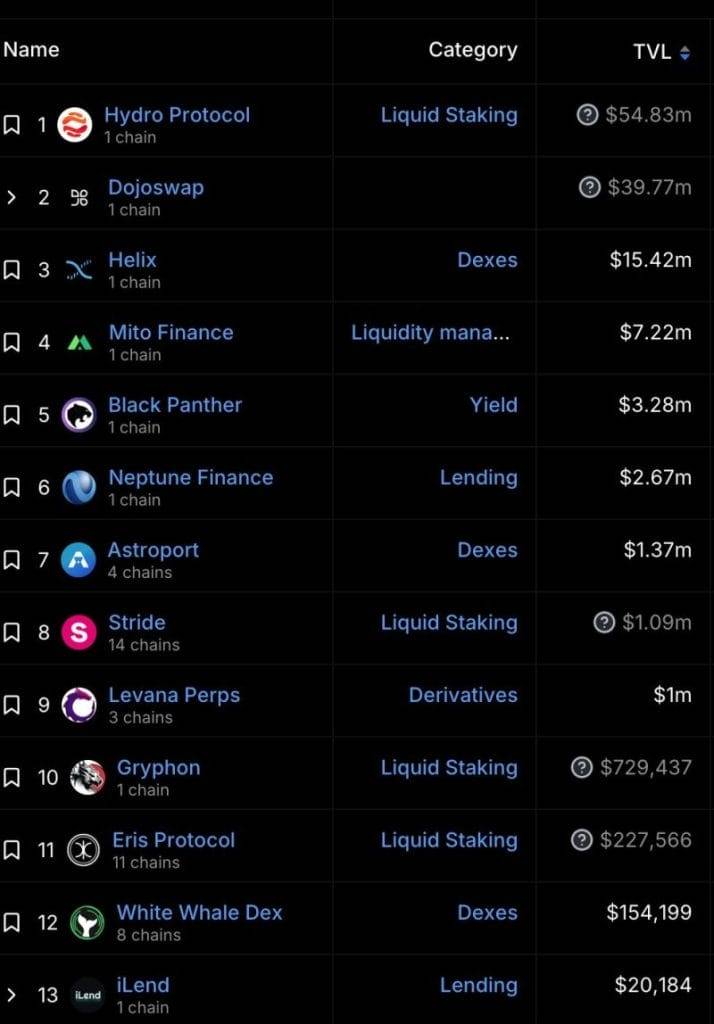
Is there a use case? ✔️
Yes the order book module makes it easy to build a proper decentralized exchange and it works across chains
How big is the market? ✔️
It’s big
Is it being used? ✔️
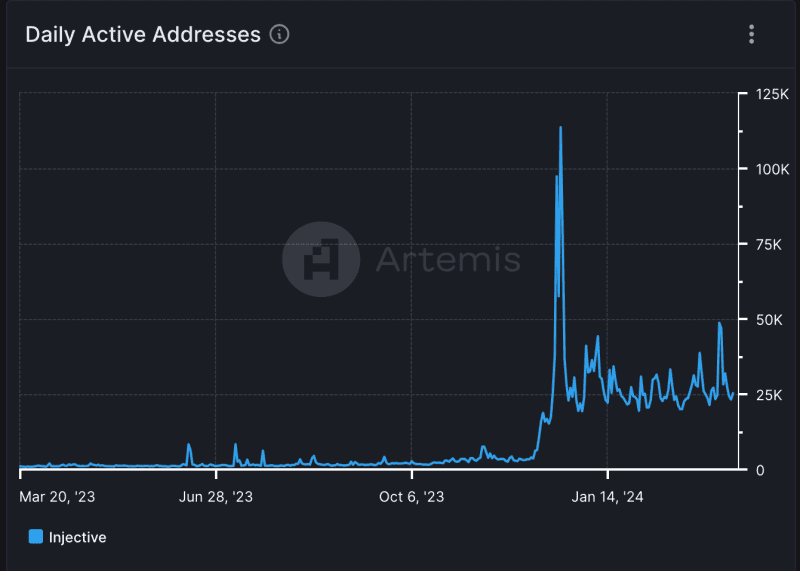
Yes, 20K new wallets in 2024. See dune.xyz
Github activity ✔️
Yes there are loads of activity and commits
Has the product launched? ✔️
Yes the blockchain is live with 12 featured apps and 230 other apps integrated onto Injective
Does it have a strategic moat? ❌
No
Is it focused? ✔️
Yes it is centered on finance dApps
Is the website easy to understand for non-crypto visitors? ❌
No, you need to be a crypto degen
Do they have a proof of concept? ✔️
Yeah many dApps are live
Is the user experience good? ✔️
Yes many of the dApps are intuitive to use for those who know how to connect a wallet
Is it already being done?
All chains have finance apps. Base, ZkSync Era, and Sei all have order book modules
At what stage is the product?
Launched
How does it create value?
Makes it easy for developers to build finance dApps
How does the project generate revenue?
Gas fees and inflation reward validators. Injective Labs, the company behind the blockchain runs its own validator nodes, and has launched a couple of dapps: Helix and Mito both of which earn 40% of the exchange fees.
3. Tokenomics
Why is the coin valuable? ✔️
You need INJ to stake, vote on governance decisions, pay fees, participate in auction burn
Back-of-the-envelope valuation ❌
Using Tascha’s valuation model results in a $3.1Bn valuation assuming no markup for a strategic moat which is close to the current market cap. If they double transactions this value goes to $3.6Bn. If you add a strategic moat multiplier of 1.2 then you get an $11Bn market cap. Let’s just agree that no one knows what the value of this thing is.
Did they do a pre-mine?
Yeah investors were allocated a pre-mine
Is supply fixed or inflationary?
Supply inflates by 7mn tokens yearly but could deflate depending on the amount burned in the auction burn.
Was it a fair launch?
No, it did a pre-mine
Circulating / total supply ✔️
93%
Token release schedule ✔️
All tokens are unlocked. Check cryptorank.io for details.
Are there incentives to reduce or lock supply? ✔️
Yes, staking and auction burn
How many tokens ✔️
INJ mainly. each dApp issues its own token and you can do stuff like liquid staking.
How much upside is left: market cap vs industry size ✔️
$3.5Bn vs many Bns
Is it listed on major exchanges?
Yes it’s listed on all tier 1 exchanges
4. Momentum
Is it trending on social media? ✔️
Yes it dominates social media
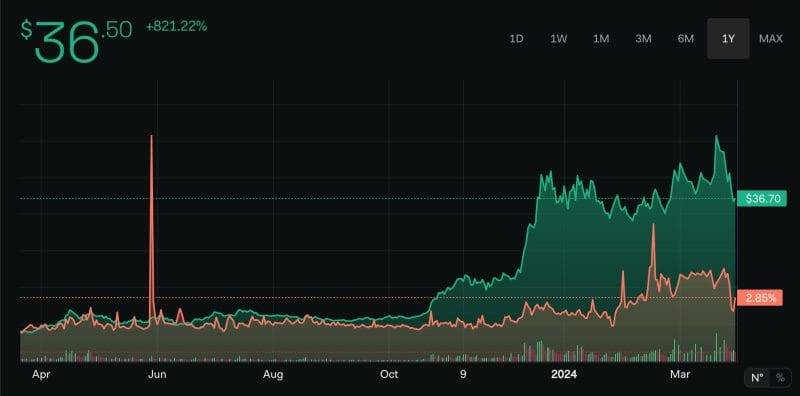
Is the market cap low compared to similar projects? ✔️
I am not sure what to compare it to here. Compare to Solana? Yes. Compared to others no
What is the crypto market like? ✔️
The bulls are in charge
What is the sentiment for the sector this crypto focuses on ❌
Meh
Elemental crypto take
The market cap could go up or could stay here. I wish I had spotted this one earlier. However, I’ve invested in other tokens that I believe have stronger pumpanomics and equally solid fundamentals at the moment such as $PROPS, $RIO, $ONDO, and $TAO. Please keep in mind that this is not financial advice.
Methodology
My methodology is naive in that I weigh each question according to what is most important to me. This assessment aims to be more of a qualitative assessment rather than anything else. But it still gives you a sense of where I think the project stands across different dimensions. If it’s scoring above 85% on a dimension you can consider that as an A mark. If it’s scoring between 50-60% it means there are things you need to be aware of before you ape in. Anything below 50% indicates a red flag.
References
- Official site
- The team and company behind the protocol
- Injective hub
- Their Github page
- Interviews: Eric Chen with Cryptonews and Boxmining
Up Next
What Is Creo Crypto and Is It a Good Investment?
Creo Engine is a gaming platform that makes it easy for games to share the same characters and assets in the form of an NFT. For example, you buy a fantasy creature in one game and then port it over to another game where it can have another use. This use can be explicity i.e. the same creature doing other stuff in the other game or it can be in the background. For example, owning the creature bestows special powers upon you. Read more.